The 1984 anti-Sikh riots have returned to political discourse in Punjab ahead of the state Assembly elections slated for February 2027, with the BJP intensifying its bid to reach out to its victims who are considered to be traditionally associated with the Shiromani Akali Dal (SAD).
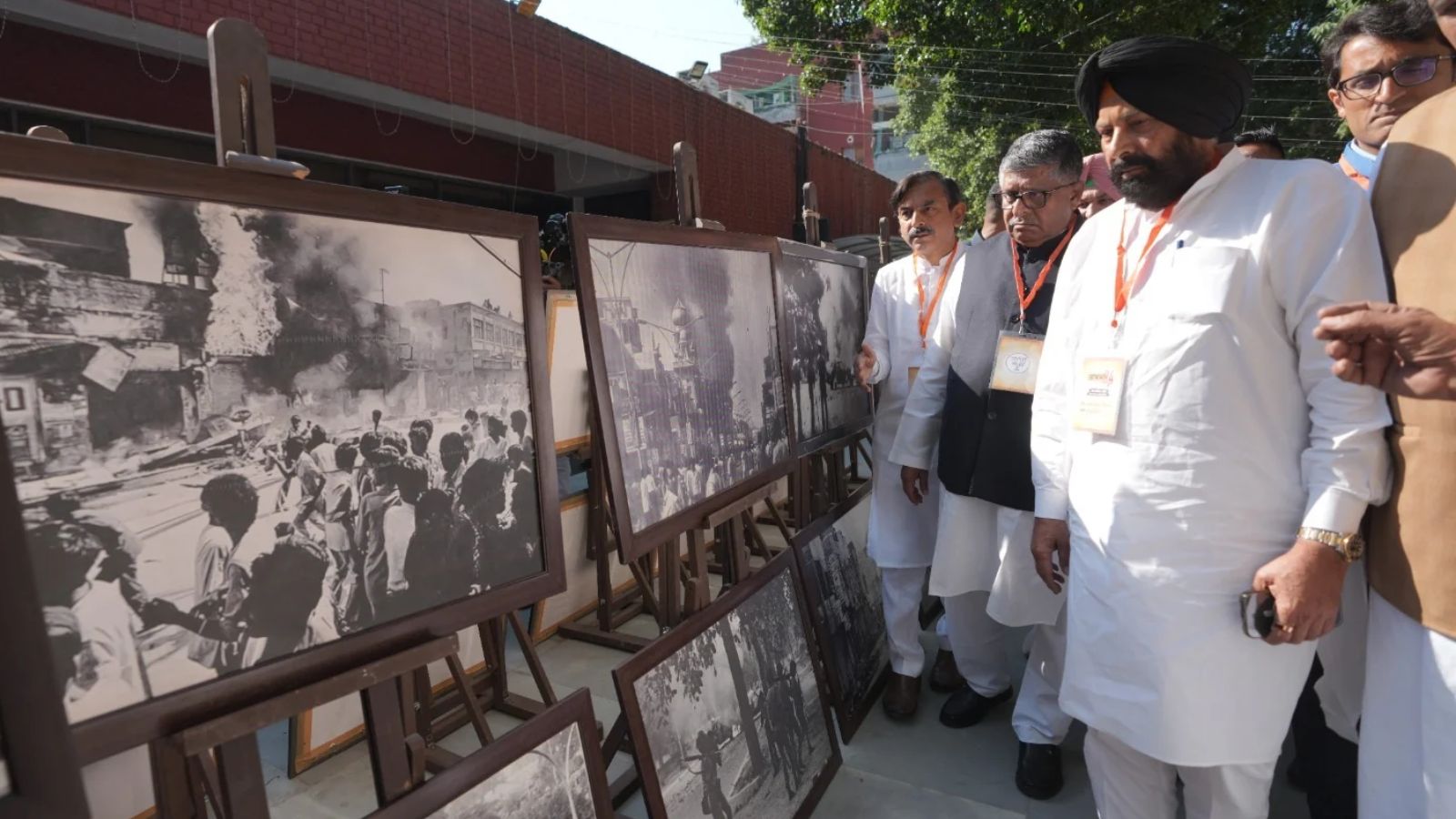
On November 1, while the Congress-led INDIA bloc organised a rally at Delhi’s Ramlila Maidan over alleged “vote theft”, which was attended by top Opposition leaders including Lok Sabha Leader of Opposition (LoP) Rahul Gandhi and Congress chief Mallikarjun Kharge, the BJP units in Delhi and Punjab held protests to mark the 42nd anniversary of the anti-Sikh riots.
Protests continued at different locations across Punjab until November 4, invoking the violence that followed the assassination of then Prime Minister Indira Gandhi on October 31, 1984, and raged for several days in Delhi and other parts of the country.
On November 4, when Gandhi addressed the Congress’s “Insaaf” rally in Sangrur to kick-start the party’s campaign for the 2027 elections, the BJP organised a day-long conclave in Chandigarh titled “Zakham 84 De”. The BJP’s Sangrur unit, led by its district-2 president Daaman Thind Bajwa, also staged a protest near the rally venue, alongside riot victims. The protesters, however, were not allowed to approach the venue and were detained by the local police.
The BJP’s aggressive mobilisation marks a shift in Punjab’s political landscape. During the years of the SAD-BJP coalition, whether in government or in Opposition, the Akalis largely represented the demands of the victims settled in Punjab. Since the alliance ended in September 2020 over the now-repealed farm laws, the BJP has made regular efforts to establish a direct connect with the riot-affected families across the state.
These efforts have involved several state BJP leaders, including Rajya Sabha MPs Satnam Singh and Vikramjit Sahney, himself a riot victim, human rights activist H S Phoolka and R P Singh, among others. Ludhiana and Mohali, in particular, have sizeable populations of the riot-affected families.
Several victims attended the Chandigarh conclave and participated in protests across the state between November 1 and 4. On its part, the SAD largely confined itself to social media posts to remember the victims.
Punjab Congress president Pargat Singh told The Indian Express that while the pain of 1984 could never be ignored, the BJP too needed to answer questions about its own record.
“Nobody has dismissed the 1984 riots. People’s sentiments are involved when they remember those days. But if the BJP keeps asking the Congress for a hisaab-kitaab of the past several decades, it should also explain what it has done in the past 13 years of being in power at the Centre. We will question the BJP and will also ask Punjab AAP Chief Minister Bhagwant Mann over his four-and-a-half years of governance,” he said.
On the emerging signs of a renewed SAD-BJP alliance for the upcoming elections, Pargat said it would give the Congress an opportunity to question both parties on their ideologies.
“More than 750 farmers died while protesting against the central farm laws in 2020-21. We will ask the BJP and SAD how they can come together after all that,” he added.
Surjit Singh, president of the Danga Peerat Welfare Society, Punjab, who led the protest against Gandhi in Sangrur, said successive governments had failed to address the demands of the riot victims.
“The AAP government has never listened to us. Mann gave us meeting dates seven times but cancelled them. When we went to Chandigarh to protest against the government’s indifferent attitude, we were lathicharged. The SAD also gave us a cold shoulder after the demise of former CM Parkash Singh Badal. BJP leaders, however, have been in touch with us for the past two years,” he said.
Surjit claimed that more than 22,000 families had been affected in Punjab, with many still awaiting rehabilitation. “We will submit our demands to both the SAD and BJP and see whether they include them in their manifestos,” he said, adding that this was the first time a political party had organised a conclave dedicated to remembering the suffering of the victims.
BJP state president Kewal Singh Dhillon said the Congress would always be remembered for the 1984 riots. “It is unfortunate that the Congress chose November 1 and November 4 for its events, showing how insensitive it is,” he said.
Dhillon also said the BJP would continue to raise several issues with the public, with the drug menace being its biggest focus. The 1984 riots, however, would remain a recurring political issue, he said, adding that the party was planning more programmes after Diwali.
Phoolka said the issue had lost some political momentum following the death of former Congress leader Sajjan Kumar (who was convicted in cases related to the riots), but resurfaced after Gandhi’s rallies in Delhi and Punjab. “These days are remembered as black days by Sikhs and now, of course, this issue will resonate in Punjab along with many other issues,” he added.