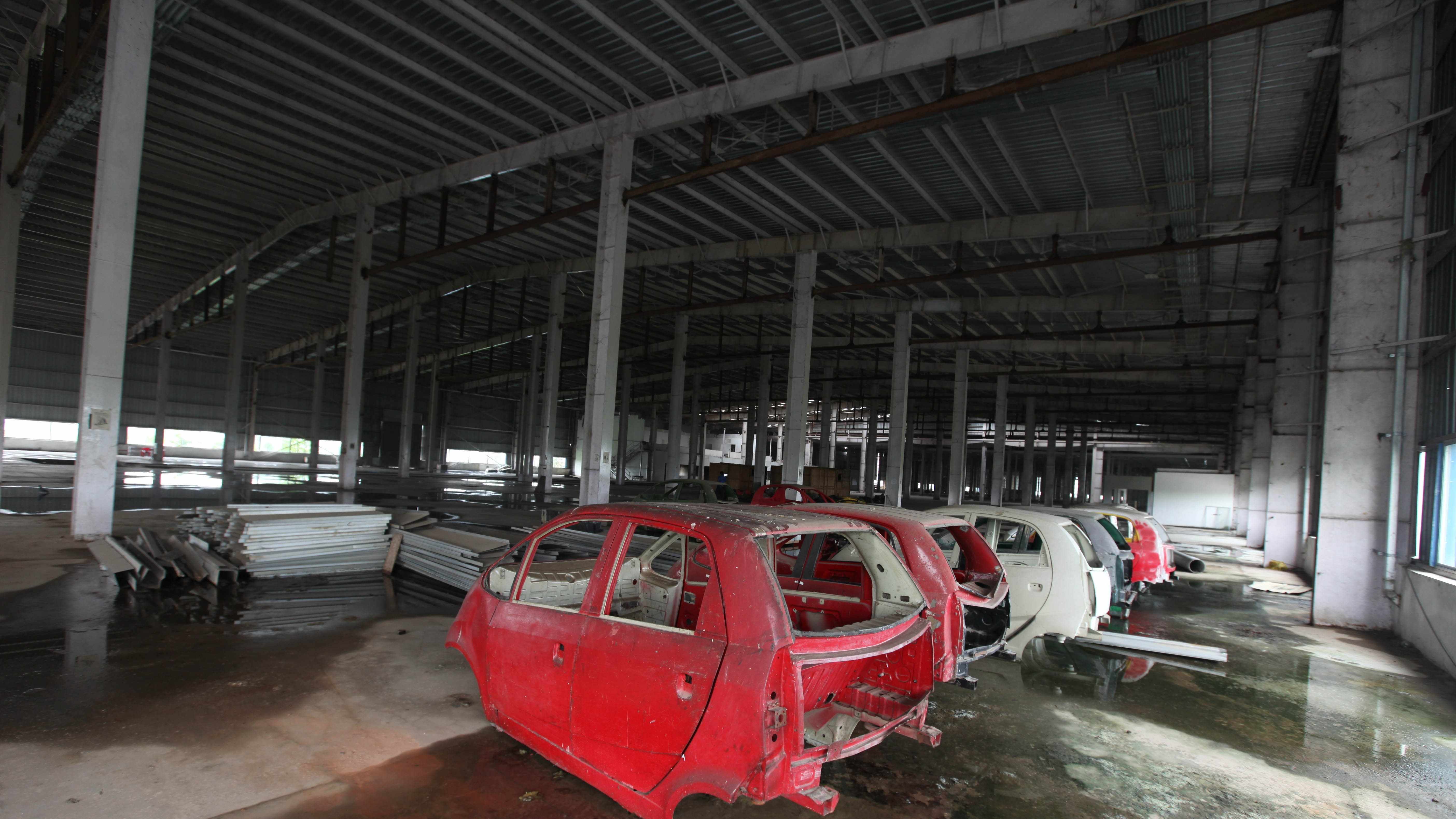
After unveiling a new investment policy on November 5, the BJP government has turned its focus to perhaps the toughest part of getting investors to the state: formulating a new land policy. In a state where land disputes have either propelled parties to power or broken them, getting this right is of crucial importance for the new government.
“Our government will not do what the previous government did. It did not acquire a single piece of land and told industrialists that they have to acquire land if they want to set up industry in the state,” said Chief Minister Suvendu Adhikari.
“We are making arrangements to buy land and create a land bank for industries,” Adhikari said, adding that his government was exploring the land-pooling system which other states have adopted. “We will give 25-30% of the land back to the landowners after developing it in line with the policies adopted by Uttar Pradesh, Haryana, and Andhra Pradesh.”
“We have already started some land-pooling experiments,” said a senior Cabinet Minister. “Now we have plenty of unused land in many industrial parks, which we can give to investors in the next two to three years. We are hoping to develop a proper land-pooling system by then. Under any circumstances, we will not go for land acquisition because it has been a sensitive issue in West Bengal’s political history.”
“The land-pooling system reduces acquisition costs while increasing land value. In this system, landowners remain stakeholders and share development benefits instead of facing displacement. The voluntary participation of landowners minimises litigation, protests, and delays in infrastructure projects. It also encourages participatory planning, transparency, and financially sustainable urban development. It promotes planned urbanisation with roads, parks, and ecological spaces,” said a senior state government official.
The comments of both the CM and the Cabinet Minister reflect that they are cognisant of the centrality of land in contemporary Bengal politics.
The Left Front’s three-decade rule beginning in 1977 was built on the success of land reforms (Operation Barga). Its eventual fall in 2011 that paved the way for the rise of the Trinamool Congress (TMC) was linked to the anti-land acquisition protests in Singur and Nandigram.
“After the Left Front government assumed power in 1977, it implemented land reforms that fragmented West Bengal’s landholdings,” said a former bureaucrat who did not wish to be named. These smallholders formed the backbone of the Left’s rural dominance for the next three decades. Though agrarian reforms helped reduce rural poverty and the mid-1980s saw high agricultural growth, the farm sector stagnated over the next decade and the decades-long industrial decline became an even more pressing problem.
The Left Front government’s piecemeal efforts to bring in investments failed. Facing population pressure, dwindling jobs, and a flight of talent from the state, by the mid-2000s the Left under new CM Buddhadeb Bhattacharya realised it would have to make a pivot towards industrialisation to create employment. Heading into the 2006 Assembly elections, the Left Front made its stand clear in its manifesto. Its slogan in that election was “Krishi amader bhitti, shilpo amader bhobishyot (agriculture is our foundation, industrialisation our future)” and it promised, among other things, to set up industrial parks and at least four Special Economic Zones (SEZs) where labour laws would be relaxed to allow industries to function with greater freedom.
After a resounding win in the election, Bhattacharya announced that the Tatas would set up a car manufacturing plant in Singur in Hooghly district on what was the fertile potato-producing belt. That is when the Left ran into trouble, ironically caused by the success of its land reforms that had empowered it for decades: the small landholders.
“Industry needs contiguous land, which direct purchase cannot ensure, since the owners of some of the plots lying within the proposed project area may well refuse to sell,” said the former bureaucrat. As the government attempted to acquire 1,000 acres of land in Singur, it ran into protests that ballooned after TMC chief Mamata Banerjee joined in. This was the beginning of the end for the Left. Similar movements to protect farmland sprang up in Raiganj (Uttar Dinajpur district), Dankuni (Hooghly), Mahishadal (Purba Medinipur), Kharagpur (Paschim Medinipur), and Panskura (Purba Medinipur), Katwa (Purba Bardhaman), Haripur (Paschim Bardhaman), Andal (Paschim Bardhaman), and Rajarhat (North 24 Parganas). To coordinate these movements, the TMC set up an umbrella body called the Paschim Banga Krishi Jomi Jibon Jibika Raksha Committee (West Bengal Committee to protect farmland and livelihood, or PBKJJJRC). In 2008 came the massive anti-land acquisition movement in Nandigram in Paschim Medinipur district that dealt a body blow to the Left government.
In Land Dispossession and Everyday Politics in Rural Eastern India, anthropologist Kenneth Bo Nielsen writes that the TMC not only managed to organise these struggles “but also created a synergy between otherwise isolated protests and transformed them into a broader force for political change so that, from 2006, land dispossession emerged as the single most important electoral issue in West Bengal”.
“While it would be wrong to say that Singur, Nandigram and the many other land wars that the state witnessed during this interval were the sole reason for the repeated electoral setbacks that the LF suffered, what these land wars did do was to provide a common focal point for the more general discontent with the LF government that had been steadily accumulating during its more than 30 years in power. The Singur movement was, in other words, the crucial event that finally made Mamata Banerjee’s mahajot materialize, enabling her to forge an alliance between the TMC, the Congress, the SUCI, many smaller parties on the left and large sections of urban civil society,” Nielsen writes.
Having dislodged the Left from power over land, Banerjee was guarded when it came to the issue of land acquisition, and her first Cabinet decision was to return 400 acres of land to “unwilling farmers” in Singur. The TMC government also passed the Singur Land Rehabilitation and Development Bill, 2011. The new law, which faced a legal challenge from Tata, “did not purport to alter the rules regulating the general process of acquiring land for industries”, Nielsen writes.
The TMC government’s land policy also categorically spelt out that the state government would not “acquire any land, forcibly or otherwise, on behalf of any industry, project or individual. SEZs will not be allowed to set up in West Bengal”. Its opposition to SEZs was so strong that it refused to give SEZ status to an Infosys project in Rajarhat for which land had already been allocated. The TMC government was also accused of being unwilling to hand over land to the Border Security Force for fencing along the India-Bangladesh border, which the Mamata Banerjee-led party has denied. In its first Cabinet meeting, the Adhikari government decided to hand over all pending land to the BSF within 45 days.
Till it was voted out in 2026, the TMC tried to shed its anti-industry image — it reached out to industrial houses and hosted annual business summits, among other things — but never quite managed to pull it off. Though it tried to stay away from land issues, the Mamata Banerjee government also faced land protests big and small. According to the Land Watch Conflict database, some of these protests were:
Bhangar (South 24 Parganas district, started in 2013): Protests against land acquisition for a power grid.
Shibpur (Birbhum, 2016): Farmers opposed the government’s Gitabitan smart city project on land that the Left had acquired to build industries and factories.
Kudna (Purulia, 2017): A dispute over the Turga pumped storage hydroelectric project over unsettled Forest Rights Act claims and lapses in the land acquisition process.
Rangpo (Kalimpong, 2017): A bridge project linking West Bengal and Sikkim has been contested over the diversion of forest land while Forest Rights Act claims remain pending.