American presidential elections have always drawn global attention, but this was the first time in living memory that US midterm elections attracted such widespread worldwide interest. It was largely due to one man: Donald Trump. Since returning to the White House less than two years ago, Trump's words and actions have not only disrupted the US political and social order but also dismantled the post-war global order, creating uncertainty and economic hardship worldwide. So it's understandable that many of his critics at home and abroad feel relieved and even pleased that he took a big drubbing in Tuesday's elections. Pollsters had predicted that the Republican Party would lose both the Senate and the House of Representatives. But even the Democratic Party did not expect its gains to be so large and widespread.
The Democrats are now expected to win the popular vote by about 13% once all the votes are counted. That will make the rout of Trump's Republican Party the worst defeat in a congressional election since the 1974 midterms, held in the immediate aftermath of the Watergate scandal involving President Nixon. Some of the Democrats' gains are truly stunning. They won a Senate seat in Kansas for the first time in almost 100 years. The last time the state elected a Democratic senator was in 1932, when Franklin Roosevelt was president. Their Michigan candidate, Abdul El-Sayed, became the country's first Muslim senator, and his fellow Democrat Keisha Lance Bottoms became America's first black woman governor.
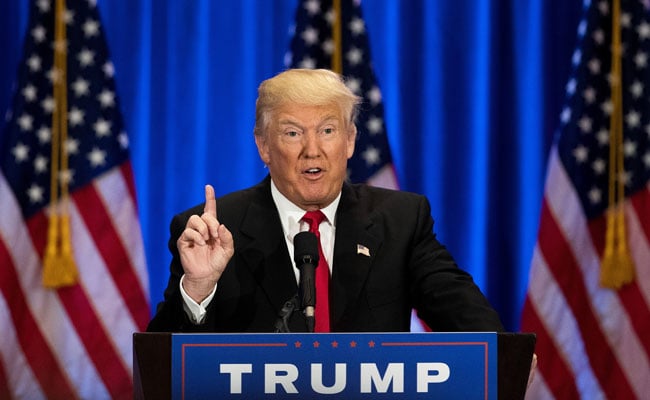
The results are a humiliating disaster for the president and a rejection of Trumpism. He made these elections a referendum on himself by repeatedly asking voters to pretend he was on the ballot - not once, but dozens of times during the campaign. Voters did just that. The party's candidates tried to distance themselves from Trump, but that didn't work even for veteran Republican Senators such as Susan Collins in Maine. Democrats had unsuccessfully tried for 30 years to unseat her. This time, though, Troy Jackson, a former state legislator whom Democrats selected only months earlier after their preferred nominee quit the race amid scandal, defeated her. An unrepentant Trump has claimed the Republicans lost because he was not on the ballot.
One of Trump's most humiliating defeats came in the Republican stronghold of Texas, where Democrats won a Senate seat and the state's governorship for the first time in nearly four decades. Here, Trump imposed Ken Paxton, the scandal-ridden Republican state attorney general, for the Senate seat, against the wishes of the local party. Not only did Paxton lose, but the incumbent Governor, Greg Abbott, also lost. A Hispanic challenger, Gina Hinojosa, defeated Abbott, a three-term Republican governor. The state has the second-largest Indian population in the United States after California, and Abbot was an unpopular figure among them. Earlier this year, he froze all new H-1B visa applications, which directly hurt Indians. So, the Republicans' losses in Texas have been caused at least partly by Indians.
Candidates who tried to copy Trump's style, such as Vivek Ramaswamy, a candidate for Governor in Ohio, also lost. Backed by Trump, Ramaswamy aired an attack advertisement featuring his rival Amy Acton's estranged mother, who claimed Acton lied about her upbringing and urged residents not to vote for her. But it drew national backlash because Acton's mother had lost custody of her children decades earlier after her husband, their stepfather, was indicted for raping Acton as a child. This issue has effectively ended Ramaswamy's political career; he earlier tried his luck as a Republican presidential nominee and later pulled out in support of Trump.

Trump won the 2024 presidential election after broadening his support beyond Republican voters. He attracted many Hispanic, Black, and Indian voters. Nearly 30% of Indians supported him. However, the latest results show that large sections of these communities have abandoned the party this time, along with many traditional Republicans. According to a New York Times analysis, nearly 30% of Hispanics and 17% of Asians shifted to Democrats this time. Indians are the second-largest group in this Asian American bloc after Chinese. Many Indian Americans were put off by Trump's immigration and visa policies, the growing hate from his MAGA supporters and tariffs on India, and returned to the Democratic Party, their traditional base.
No American president in modern history has polarised the country as much as Trump. Racial, cultural, social and economic divisions have always existed in US society, but Trump has widened and exploited them for his own advantage. He lowered the dignity of his office by using foul language against his critics and even journalists, an unprecedented move for an American president. While most Americans were hit by inflation caused by Trump's tariffs and the Iran war, his own family and close circle of friends amassed vast wealth. He was accused of corruption but wasn't deterred by the criticism and kept accepting expensive gifts from foreigners. Voters were angry with the Republicans for capitulating to him and failing to protest.
Foreign policy is not generally an issue in US elections, but in this election, thanks to Trump, the Iran war became a major issue. Vice President JD Vance has admitted that the Republicans lost because of the Iran war. Vance opposed the war from the beginning, though he publicly backed Trump on the issue. The war was deeply unpopular, even among some of Trump's other supporters. The conflict is now estimated to have cost $47 billion. For ordinary voters, it brought economic hardship by making petrol and diesel much more expensive. Diesel prices rose by 60%, hitting the Republican Party's rural voters hard. The party may still have lost in these elections, but the war certainly made the defeat worse.
The Iran war also made Israel unpopular in the country where the Jewish lobby has traditionally been very strong. The victory in Michigan of Democrat Abdul El-Sayed, a bitter critic of Israel, first in the party's primary and then in Tuesday's election, was also a defeat for the Jewish lobby. The Israel lobby group, AIPAC, reportedly spent $32 million on a campaign against him. Even Trump's attempts to discredit him by labelling him a jihadist and a terrorist sympathiser were clearly dismissed by voters.
With Democrats now controlling both houses of the US Congress, Trump will no longer have smooth sailing. He has largely ruled by executive order, but that won't be easy now. The opposition-controlled Congress can block funding for the war with Iran or reclaim tariff powers from the president. Trump can veto those attempts. Democrats need a two-thirds majority to override the veto, which they don't have. So a confrontation is expected. Republican control of Congress allowed Trump to act with near impunity. Democrats have promised to investigate allegations of misconduct by the Trump administration. Corruption allegations against Trump's family and friends will most likely be investigated as well.
But foreign policy is another issue where even a lame duck president has immense power. In his authoritarian style, Trump has been trying to use US power to impose his will worldwide, alienating US allies since his return to the White House. This is unlikely to change. He may even try to redirect his anger over election losses at home by doubling down on foreign interventions. Trump doesn't like to be a loser and would still try to secure some victory. He is the commander-in-chief of the US armed forces, the world's most powerful military machine, with a budget of nearly a trillion dollars. That makes him more dangerous. He may attack Cuba with the aim of regime change there. Marco Rubio hasn't hidden his desire for that.
But the US and the rest of the world should worry more about what Trump might do next in Iran. Both Israel and the US have been planning a new wave of attacks on the country. Netanyahu also needs another military action against Iran to remain prime minister, despite his defeat in last week's elections. US military assets have been reinforced in the Gulf in recent weeks. US personnel have also been withdrawn from their bases in the Gulf in anticipation of Iran's retaliatory strikes. Iran has already warned that the retaliation would be much bigger this time. Gulf states and much of the world, which depend on oil, are dreading the renewed conflict. This will not be good news for JD Vance, who still hopes to succeed Trump in the White House. He has already called for an end to hostilities and even a "change" in the US relationship with Israel. But Trump will now be only interested in his own legacy, however risky that might be.
Russia launched the invasion of Ukraine while Joe Biden was in the White House. But Trump, who hasn't stopped blaming Biden for the war and many other problems in the United States, has shifted US support away from Ukraine. His treatment of Ukrainian President Volodymyr Zelenskyy during his 2025 visit to the White House is well known. Trump openly admits that he gets along better with Russian President Vladimir Putin. Recently, he lifted some sanctions against Russia and signed a diesel supply deal with Moscow. Trump will try to put more pressure on Ukraine to accept territorial concessions to Russia in order to achieve a settlement he can claim as a victory.
Trump's lifting of some sanctions against Russia has benefited India, but India should not expect much change in US policy. Trump may have imposed tariffs on most of the world, but they are unlikely to be reversed as a policy. We should expect the US-India trade deal to be signed soon, as Trump would like to claim a success there. However, his tough immigration and visa policies that have also affected Indians will remain, as they are popular with Americans. But Democrats will now push for a softer approach by the US immigration agency, ICE. Party leaders have also called for an investigation into the agency's aggressive tactics and the conditions of its detention centres.
The challenge for the world is that the president of the world's most powerful country has not been guided by sound foreign policy advisers. His instincts drive his policies. His foreign-policy negotiators are not experienced US diplomats but his son-in-law, Jared Kushner, and his businessman friend, Steve Witkoff. The person in charge of the Pentagon, the Secretary of War, is not a military expert but a yes-man, Pete Hegseth. That makes a politically wounded Trump even more dangerous.
(Naresh Kaushik is a former editor at the BBC and Associated Press. He is based in London.)
Disclaimer: These are the personal opinions of the author