For the past month, Donald Trump told crowds across America to "pretend I'm on the ballot". On November 3, voters took him at his word. The Democrats have won control of both the House of Representatives and the Senate. At the time of writing, they hold about 54 Senate seats to the Republicans' 44, with Alaska and Mississippi still counting. In the House, they have gained more than two dozen seats, and some Democratic strategists expect their share to cross 240. Early exit polls put Trump's approval at 38%, the lowest recorded for a President in a midterm election in those surveys, and about six in ten voters said he was a factor in their choice. The morning after, Trump wrote that he "wasn't on the Ballot and if I was, we would have won IN A LANDSLIDE!" He blamed Texas Governor Greg Abbott for his own defeat, saying he "wouldn't have lost" had he not become a "RINO", that is, a Republican in name only.
Midterms usually punish the party in the White House. But this result belongs with the great waves of 2006 and 2018, and in one respect goes further. Those elections were fought largely in swing territory. This one travelled far and broke deep inside the Republican heartland.
Texas is the clearest example. James Talarico, a former schoolteacher and state legislator, defeated Ken Paxton for the Senate. It is the first Democratic statewide win in Texas since 1994, and the first Democratic Senate win there since 1988. On the same night, Gina Hinojosa unseated Governor Greg Abbott. Kansas, which has not elected a Democratic senator in nearly a century, is projected to do so now. The Democrats also took Senate seats in Iowa and South Carolina, a state Trump won by 18 points in 2024, along with North Carolina and Maine. In the House, Republicans lost several districts that Trump had won by more than 10 points two years ago.
Ohio, a state Trump won three times, showed its own displeasure. Amy Acton, the former state health director whom Republicans had once blamed for pandemic lockdowns, defeated Vivek Ramaswamy for governor. Sherrod Brown won back a Senate seat. Mr Ramaswamy and his allies spent about $101 million on advertising, roughly three times as much as Ms Acton, and he still lost. Money failed elsewhere too. Elon Musk gave more than $276 million to Republican groups, including $158 million routed to a group backing Paxton in what became the most expensive Senate race in American history.
The Republicans had a plan. In February, according to a CNN account, Trump's aides set out a strategy to keep Congress by putting the President "on the ballot" and campaigning on tax cuts, easing inflation and new constituency maps drawn to protect Republican seats. Fewer than two weeks later, Trump attacked Iran.

The war undid that plan. Oil reached $100 a barrel, petrol prices neared $4 a gallon, and food prices rose correspondingly. One adviser said that months of preparation had become "obsolete". The war also ran counter to the promise that had built Trump's coalition: that he would lower prices and keep America out of foreign wars. When voters complained about the cost of living, Trump called the concern a "hoax". "If the war had not happened, it would be an entirely different election cycle," Barrett Marson, an Arizona Republican strategist, told CNN. "And only one person started that war."
Weak candidates added to the damage. Trump backed Paxton, who had been impeached by the Texas House in 2023 and acquitted by the state Senate. He did this over the objections of Republican leaders in Congress. In South Carolina, he endorsed Darline Graham, a political novice, to succeed her late brother, Senator Lindsey Graham. Large deportation raids cost the Republicans their old lead on immigration. In Ohio, Ramaswamy faced attacks on his Indian heritage and Hindu faith from his own side, starting with a primary rival who called him an "anchor baby". His last-minute attack on his rival, which was widely condemned, used her estranged mother and backfired on him. Nearly one in five Republican primary voters backed that rival.
Trump's own campaign told the story of a party on the defensive. He promised Republicans in close races that he would visit "every one of those 35 places", then spent much of the final month rallying in states he had won easily. His $400 million political fund held back its money for months. On the eve of polling, he devoted much of his last speech to the algae in the Reflecting Pool at the Lincoln Memorial.
Trump now faces his last two years with Congress in Democratic hands. The House will open investigations into the administration, conflicts of interest, and the President's family business dealings, with subpoenas to compel testimony and documents. It will control spending bills, including money for the war and for immigration enforcement. The Senate matters even more. A Democratic majority can block the President's nominees, from ambassadors to judges.
The courts are part of that. Clarence Thomas is 78 and Samuel Alito is 76, the Supreme Court's two oldest justices. Florida Governor Ron DeSantis wrote that the chance of confirming a "worthy successor" to either during Trump's term was now "zero". Thus, the Republicans are likely to lose their hold on judicial support for their political agendas.
Trump told The New York Times he was "absolutely willing to accept those results", which eased fears of a disputed count. He also offered to work with the Democrats while posting a picture of his red cap stamped "VETO". That is the likeliest shape of the next two years: a President governing by veto and executive order, with the courts as the referee. States will finish certifying their results through November and December, and the new Congress takes its seats on January 3.
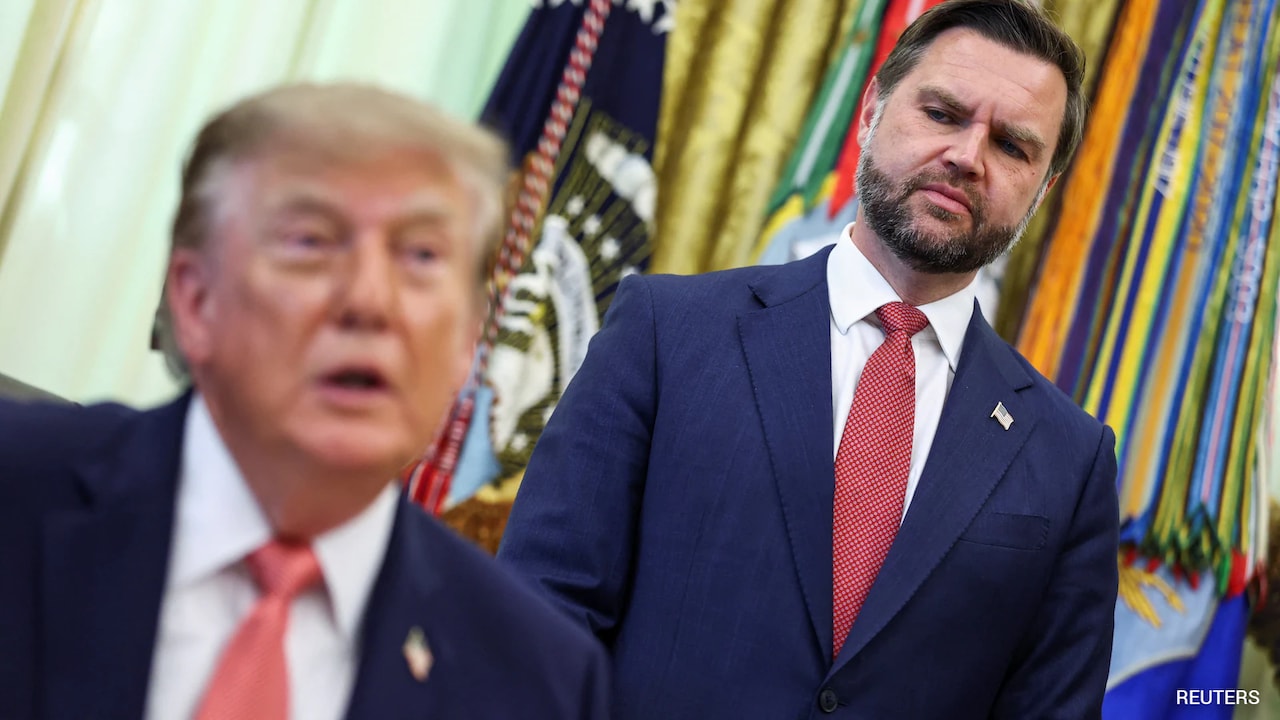
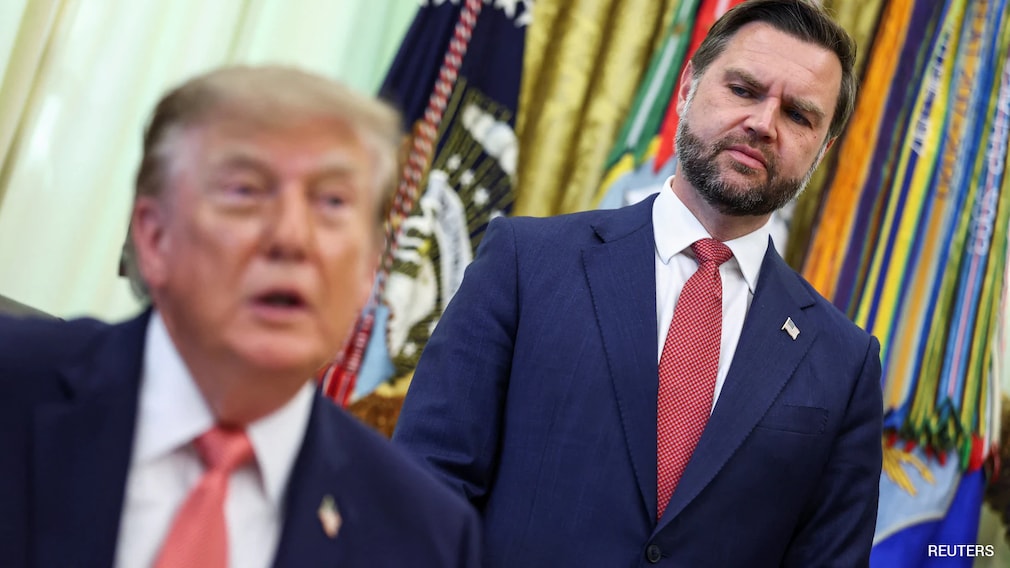
The defeat reshapes the race to succeed Trump. JD Vance campaigned as hard as the President, served as the Republican National Committee's finance chair. He watched his home state of Ohio elect a Democratic governor and send a Democrat to the Senate seat he gave up to become Vice President. Before the vote, a Republican Senate campaign operative warned that if the party lost badly and Vance ran in 2028, "you've got a future presidential candidate who owns a lot of this". Prediction markets had already cut his chance of winning the nomination from about 53% in September to about 44% in October.
Marco Rubio stayed off the campaign trail as Secretary of State and carries less of the domestic defeat, though he is tied to the war that drove it. A defeated party often turns to a more conventional figure, and Rubio fits that description better than Mr Vance. Others, Mr DeSantis among them, will now argue that the party needs a break from the Trump years.
The map has changed as well. If Texas, with 40 electoral votes, can elect a Democratic senator and governor, Republicans can no longer count it as safe in a presidential year. Iowa, Kansas, and Ohio send the same warning. The Democrats, meanwhile, have new faces who won in states Trump carried, Talarico and Acton among them, alongside Gavin Newsom, California's governor, who has made himself the party's loudest opponent of Trump.
A President constrained at home often turns abroad, where he can act more freely. Trump will try, leaning on the tariff powers Congress has already given him and on personal diplomacy with leaders such as Xi Jinping. But a Democratic Congress can now tie funding to the course of the war with Iran, and a Democratic Senate will shape his appointments and any treaty he brings home.
For India, the change is more in tone than in terms. The Senate passed the law allowing tariffs of up to 100% on the largest buyers of Russian energy, 86 to 11, and 58 House Democrats voted for it. Scepticism about skilled migration and outsourcing firms now has bipartisan support. Delhi will also lose a familiar voice in the Senate, where John Cornyn, the Republican co-chair of the India Caucus, leaves in January after losing his primary to Paxton.
Indian Americans, for their part, had a good night, mostly on the Democratic side. Ro Khanna, Ami Bera, and Pramila Jayapal kept their House seats, and Suhas Subramanyam held his seat in northern Virginia. Pia Dandiya became the first South Asian American elected to Congress from Florida, and Amish Shah was ahead in a Republican-held seat in Arizona at the time of writing. In Maryland, Aruna Miller was re-elected Lieutenant Governor alongside Wes Moore, and in Wisconsin, Josh Kaul won another term as Attorney General. Several others won seats in state legislatures, including Arvind Venkat in Pennsylvania, Ram Villivalam in Illinois, and Saira Draper in Georgia. The Republican candidates fared worse. Besides Ramaswamy, Saritha Komatireddy lost the New York Attorney General race.
Delhi would be wise to engage the new committee chairs before January. This verdict changes who holds power in Washington, while the broad support for India across both parties remains in place.
(The author is a Research Fellow in the Geostrategy Program at the Takshashila Institution)
Disclaimer: These are the personal opinions of the author