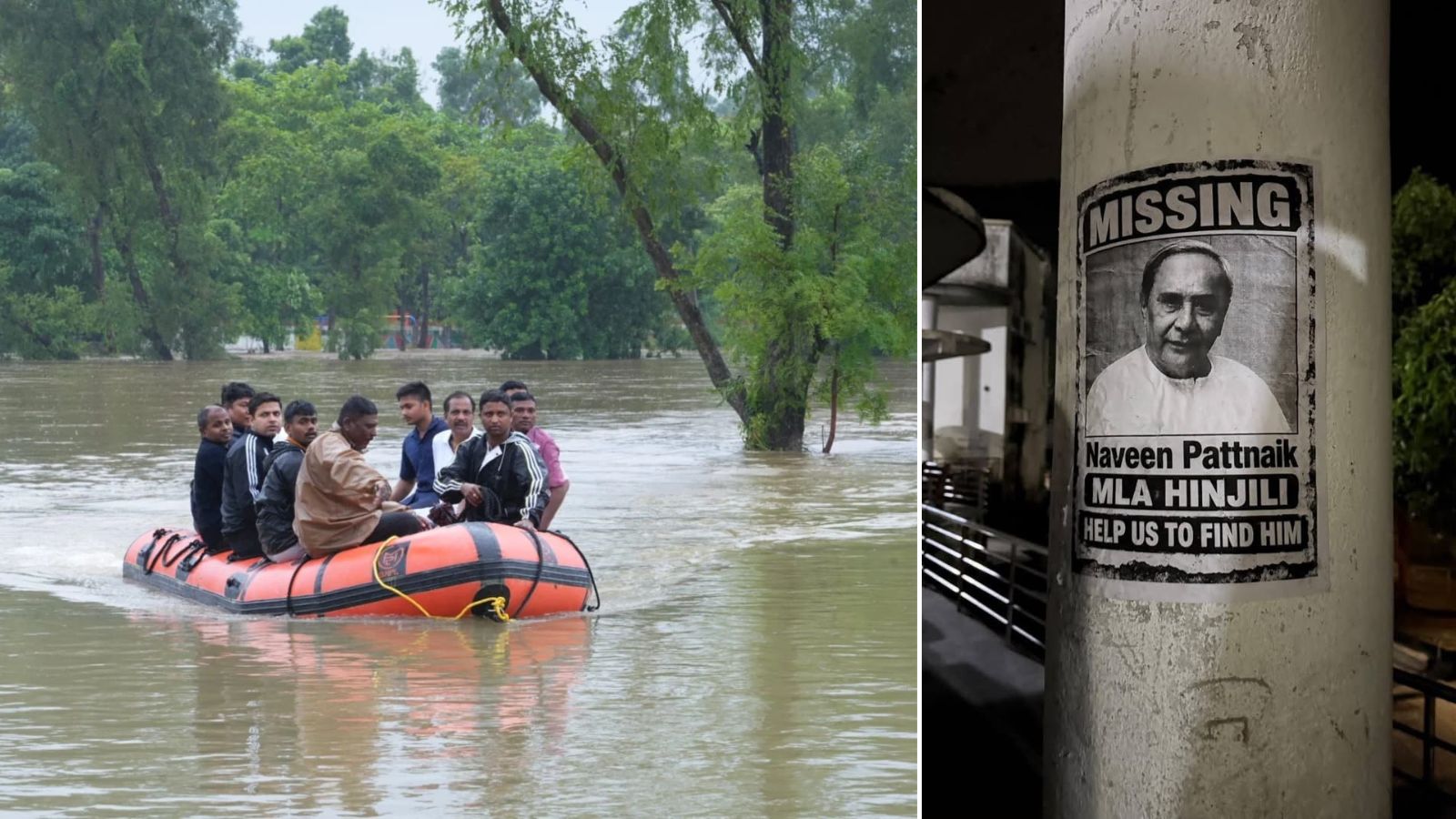
Even as Ganjam, Odisha’s most populous district, struggles to recover from the devastation of cyclone Arnab’s aftermath, a political storm is brewing over the government’s handling of the natural disaster. Politically, the state is crucial as it helped power the BjP’s rise to power and is seen as its stronghold.
Allegations of a delayed response and inadequate relief measures have put the ruling BJP on the defensive, with videos surfacing of ministers and BJP MLAs facing public backlash during visits to affected areas.
Posters branding BJD president Naveen Patnaik as “missing” have also surfaced in his Hinjili constituency, one of the worst-affected areas, giving the BJP an opportunity to question the former Chief Minister’s response to the crisis in his own backyard.
The disaster has also triggered a war of words between the ruling party and the Opposition on social media. While the BJD has termed the floods a “man-made disaster”, accusing the BJP government of mismanagement that pushed lakhs of people into distress, the BJP has sought to turn the spotlight on Patnaik’s absence from his constituency.
Criticising Patnaik for not visiting Hinjili, Parliamentary Affairs Minister Mukesh Mahaling. “The BJD social media accounts are being used to troll, claiming that the government is failing to achieve anything and that its ministers are not monitoring affairs effectively. I would ask them to introspect their own situation. Why hasn’t the Leader of Opposition visited his own constituency?” Mahaling said.
Senior BJP leader Biranchi Narayan Tripathy on Wednesday slammed the previous BJD government’s lack of flood-control measures and poor management of river banks and dams.
Ganjam, along with neighbouring Gajapati and Kandhamal districts, has witnessed one of its worst floods in 36 years, reviving memories of the 1990 floods in the Rushikulya river basin. The deluge washed away major roads, damaged public infrastructure and homes, and destroyed standing paddy crops and vegetable fields, leaving a trail of destruction across the region.
Thousands of affected people continue to take shelter in relief camps across the district. Six people have died in rain-triggered landslides in different areas, while rescue teams are continuing the search for 10 people missing from a hilltop village.
With the administration now facing the daunting task of restoring normalcy, senior officials have been deployed to assist the district administration in relief, rehabilitation and restoration work.
Officials have attributed the widespread flooding to excessive rainfall between October 27 and 29, which disrupted normal life across the region. The India Meteorological Department (IMD), which had forecast heavy to very heavy rainfall in the district, recorded more than 500 mm of rain at multiple locations during the period.
In a social media post, BJD leader Sujata Rout Karthikeyan alleged that despite the IMD’s early warning and forecast of heavy to very heavy rainfall in Ganjam, several reservoirs in the district were nearly 80% full.
“The gates of the reservoirs were opened only after the water flow increased due to heavy rainfall without giving prior warning to the people in the low-lying areas. As a result, a flood-like situation, never seen before, was created and extensive damage to life and property was caused. The mistake (of the administration) inflicted unspeakable pain upon lakhs of people,” Karthikeyan wrote.
She demanded accountability from the BJP government, describing the situation as one of “unforgivable negligence and man-made misery”.
A BJD delegation that visited Ganjam to assess the situation also criticised the state government’s relief measures, alleging that a majority of those affected had not received relief materials.
Amid allegations of delayed response by the administration, what also came as a shot in the arm to target the “insensitivity” of the BJP ministers is the “piggyback ride” of Panchayati Raj Minister Rabi Naik on his PSO while visiting the flood affected areas. The BJP dubbed it a non-issue.
Experts, meanwhile, have attributed the scale of the disaster to the state government’s alleged miscalculation, lack of preparedness and complacency.
“In view of Cyclone Arnab, the state government made all preparations considering Malkangiri to be the worst-affected district and mobilised maximum resources there. Despite the alert of very heavy rainfall in Ganjam, the administration failed to assess the situation, which led to flooding across the district,” a retired bureaucrat said, requesting anonymity.
Citing Odisha’s past record in disaster management, the former official said large-scale evacuation to safe shelters ahead of natural disasters had played a crucial role in the state’s zero-casualty mission.
“Field-level officials and the Water Resources Department should assess the situation and advise the administration to evacuate people from vulnerable areas. People had to struggle for their lives after floodwater inundated their localities because they had not been moved to safe shelters,” the official said.
The official further alleged that after the cyclone crossed the Andhra Pradesh coast on October 28, the government became complacent and began claiming that it had achieved its zero-casualty target, even as the real challenge posed by flooding was only beginning.