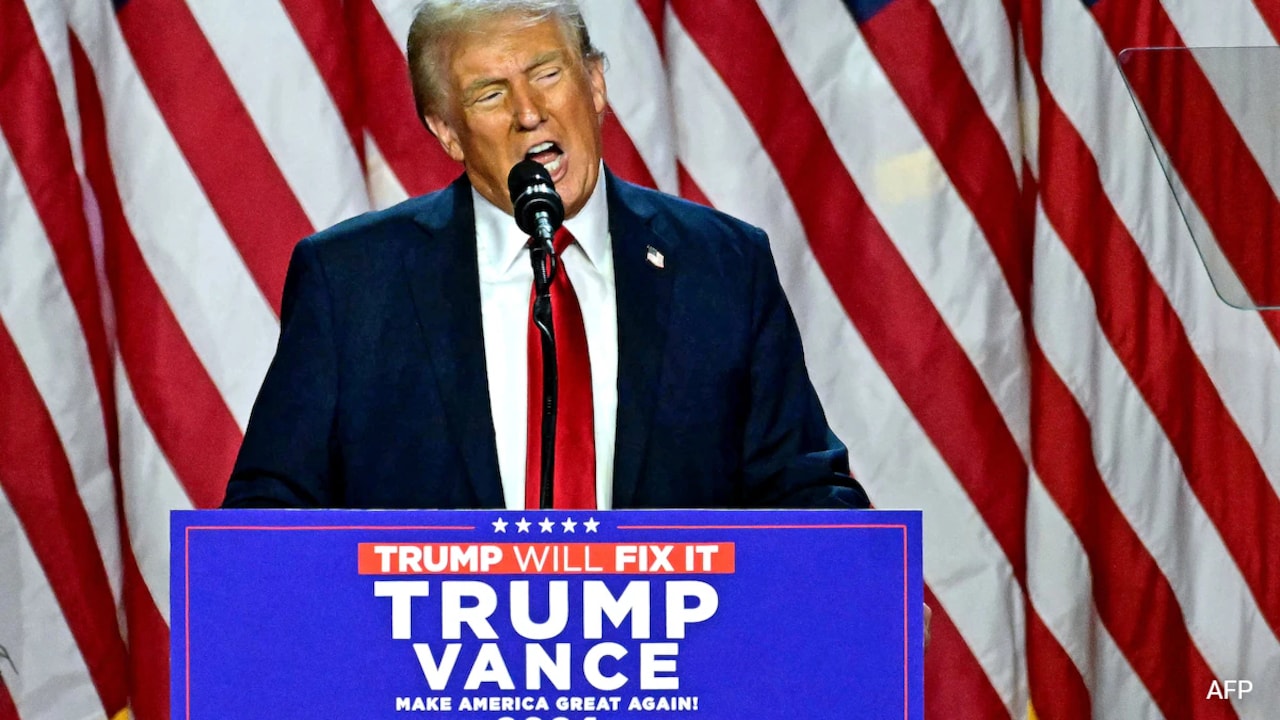
The 2026 US midterm elections have produced a decisive political setback for President Donald Trump, with the Democratic Party securing majorities in both the House of Representatives and the Senate. The outcome represents more than a conventional midterm rebuke to an incumbent administration. It reflects growing domestic disquiet over the cost of living, tariff-induced inflation, and the continuing war in Iran, while signalling a significant recalibration of the political constraints confronting the White House during the remainder of Trump's second term.The emergence of a divided political establishment, with Democrats commanding both chambers of Congress and Republicans retaining the presidency, is likely to complicate Washington's domestic and international policy calculations. More significantly, it raises questions about the durability of Trump's political agenda, the limits of presidential authority, and the credibility of American strategic commitments at a time of considerable geopolitical turbulence.
The Democratic takeover of Congress fundamentally alters the legislative environment in which the Trump administration will operate. With control of both chambers, Democrats are positioned to obstruct major legislative initiatives on taxation, federal spending, and deregulation. The administration's ability to translate its electoral mandate into legislative outcomes will consequently depend on a degree of bipartisan accommodation that has remained elusive in an increasingly polarised Washington.

Yet congressional opposition does not necessarily translate into an effective reversal of presidential policy. Trump retains the veto, executive orders, and considerable administrative discretion. This could usher in a period of institutional confrontation in which legislative attempts to reverse tariff policies, healthcare retrenchment, or immigration restrictions are likely to encounter presidential resistance. The resulting political contest may increasingly revolve around appropriations, government funding, and continuing resolutions rather than substantive legislative compromise.
Equally consequential will be the expansion of congressional oversight. Democratic control of committee chairmanships and subpoena powers provides an institutional platform for investigating allegations of executive overreach, ethical improprieties, foreign business interests, and administrative accountability. The White House could therefore find itself increasingly preoccupied with defending its record rather than advancing its legislative priorities.
The Senate's Democratic majority will also complicate the administration's judicial and executive appointments. Conservative judicial nominations and Cabinet vacancies are likely to become subjects of prolonged political negotiation, with confirmation increasingly dependent on the administration's willingness to identify candidates capable of securing broader congressional support.

Historically, presidents confronting legislative resistance at home have often sought greater room for manoeuvre in foreign policy. The institutional asymmetry between domestic and external policymaking provides the executive with considerable discretion in matters of diplomacy, national security, and military engagement. Trump's political predicament could reinforce this tendency. However, the continuing conflict with Iran and the wider instability in the Middle East are likely to make foreign policy an arena of intensified congressional contestation rather than an uncomplicated presidential escape route.
Democrats are likely to deploy their oversight and appropriations powers to demand greater transparency regarding American military operations, their strategic objectives, and their financial costs. The administration's approach to Iran, in particular, could become a central point of institutional friction. Questions surrounding the duration of military engagement, escalation risks, and the absence of a clearly articulated political endgame will acquire greater prominence.
Trade policy will constitute another important battleground. Trump's reliance on delegated executive authority to impose tariffs has already generated considerable economic and political debate. A Democratic-controlled Congress is likely to challenge the breadth of these powers, particularly as the inflationary consequences of tariffs become more politically salient. This could reopen the larger debate about the appropriate balance between congressional authority over commerce and presidential discretion in economic statecraft.
There are, nevertheless, areas where partisan divisions may prove less consequential. Strategic competition with China, restrictions on advanced semiconductor exports, and controls over sensitive artificial intelligence technologies continue to command substantial bipartisan support. This convergence suggests that, despite domestic political turbulence, the underlying strategic orientation of American policy towards Beijing is unlikely to undergo a fundamental transformation.
For international partners and strategic competitors, the midterm outcome is likely to accentuate the unpredictability of American policymaking. A divided Washington, where the executive retains considerable foreign policy discretion but faces growing congressional resistance, could undermine the continuity and durability of US commitments, creating opportunities for adversaries to exploit institutional divisions. This uncertainty is particularly consequential for global energy markets, where the intersection of the Iran conflict, sanctions policy, and congressional scrutiny of military engagement could generate fresh volatility in oil prices, with wider implications for global inflation. For European and Indo-Pacific allies, Democratic control of Congress may offer an alternative channel of engagement and some reassurance against unilateral American security retrenchment. Yet, the expectation that allies assume greater responsibility for their own defence is likely to endure, reflecting a bipartisan recalibration of Washington's approach to burden-sharing.
For India, the implications of the American midterm outcome are particularly nuanced. The changing political balance in Washington could create new opportunities in specific policy areas, even as the broader strategic relationship remains anchored in the imperatives of the Indo-Pacific.
The Democratic victory complicates the trajectory of US-India trade negotiations. Trump may seek to accelerate trade agreements and demonstrate tangible economic outcomes as a means of countering domestic political criticism. At the same time, congressional scrutiny of unilateral tariff measures could constrain the administration's negotiating approach. For New Delhi, this presents a potentially advantageous opening. Greater political resistance to indiscriminate tariff measures in Washington could strengthen India's negotiating position, particularly in sectors where access to the American market is commercially significant. Nevertheless, India should not assume that Democratic control automatically translates into a more accommodating American trade policy. Concerns over market access, industrial protection and trade imbalances are not exclusive to the Republican Party.
Immigration remains another area where the changing congressional balance could matter considerably to India. Restrictions on H-1B visas, higher administrative fees, and proposed changes to foreign student Optional Practical Training arrangements have implications for Indian professionals
and the country's technology services industry. A Democratic-controlled Congress is likely to subject such measures to closer scrutiny, particularly where they affect American businesses, universities, and technology companies dependent on international talent. This could provide Indian stakeholders with a more receptive political environment in which to articulate their concerns. However, the broader American debate over immigration and labour-market protection will continue to impose constraints on any expectation of a substantive policy reversal.
The question of India's continued purchase of Russian crude oil remains a potential source of friction in bilateral relations. The prospect of punitive secondary tariffs or sanctions against countries maintaining energy ties with Moscow has created uncertainty for New Delhi's energy-security calculations. A change in congressional control could complicate efforts to build legislative momentum behind particularly aggressive punitive measures. Democratic lawmakers may demand greater scrutiny of the economic and diplomatic consequences of such policies, especially their implications for global energy markets and relations with strategically important partners such as India. This could provide New Delhi with some diplomatic breathing space. It would, however, be premature to interpret congressional resistance to unilateral executive action as a wholesale abandonment of American pressure on countries maintaining energy relationships with Russia.
Perhaps the most important aspect of the evolving American political landscape for India is what is unlikely to change. The strategic partnership between New Delhi and Washington rests on a convergence of interests that transcends the immediate electoral fortunes of either party. Defence cooperation, critical and emerging technologies, maritime security, and the broader Indo-Pacific architecture retain considerable bipartisan support. The ten-year bilateral defence framework and expanding cooperation in advanced technologies illustrate the institutional depth of this relationship.
The strategic logic underpinning US-India cooperation is fundamentally linked to the changing balance of power in Asia and the challenge posed by China's expanding regional influence. These considerations are unlikely to be displaced by the outcome of a midterm election. Indeed, congressional engagement could provide an additional layer of institutional support for the relationship, helping insulate it from fluctuations in executive policy.
The 2026 midterm elections have introduced a significant new variable into American politics. Trump's second term will now unfold under conditions of greater legislative resistance, intensified congressional oversight, and heightened institutional contestation. The administration may retain considerable executive authority, particularly in foreign affairs, but its ability to sustain policy initiatives over the longer term will become increasingly dependent on political negotiation and institutional accommodation.
For the international community, the implications extend beyond the immediate weakening of Trump's domestic political position. The emergence of a divided Washington raises questions about the consistency and credibility of American global engagement at a moment when geopolitical competition and regional conflicts are already placing considerable pressure on the international order.
For India, the challenge will be to distinguish between the tactical opportunities created by America's domestic political divisions and the structural continuities underpinning the bilateral relationship. There may be greater room for manoeuvre on trade, immigration, and energy-related disputes, but the strategic convergence between the two countries remains anchored in a much broader geopolitical calculus. The midterm verdict may constrain Trump's political ambitions without fundamentally altering the strategic foundations of American foreign policy. For New Delhi, the imperative will be to engage with both the White House and a newly empowered Congress, preserving the bipartisan character of the partnership while navigating the uncertainties of an increasingly contested American political landscape.