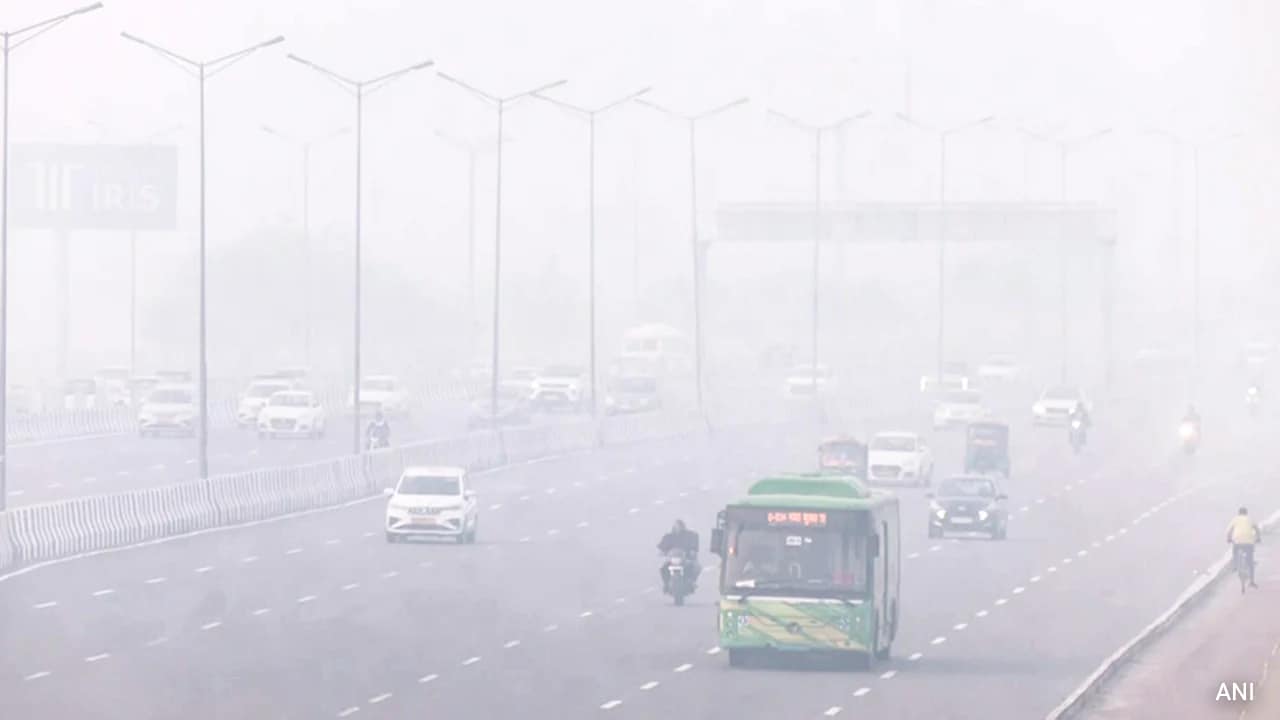
Air pollution is claiming nearly four lives every minute in India. That translates into more than 5,500 deaths a day and over two million deaths in a year, according to the State of Global Air 2025 report. The scale of the problem is particularly alarming as Delhi and several other parts of north India enter another winter pollution season. The national capital's air quality index (AQI) stood at 377 on November 4, placing it in the 'very poor' category, according to the Central Pollution Control Board (CPCB).
READ | Delhi Plans Artificial Rain If Pollution Worsens After Diwali, Chhath Puja

The figure was the highest recorded in Delhi in nearly 10 months. Several monitoring stations across the city had already slipped into the 'severe' category, raising concerns about the days ahead.
But the problem extends far beyond a few weeks of winter smog. Air pollution is a year-round public health crisis, with consequences that range from respiratory and cardiovascular diseases to reduced life expectancy.
READ | Delhi Pollution: How Schools Can Prepare For A Bad-Air Day? Check Measures

The impact is not limited to people with existing respiratory conditions. Fine particulate matter, particularly PM2.5, can penetrate deep into the lungs and enter the bloodstream. Long-term exposure has been linked to heart disease, stroke, lung cancer, chronic obstructive pulmonary disease and other serious health conditions.
Children, older people and those with pre-existing illnesses are particularly vulnerable.
The deterioration in Delhi's air quality offers a stark illustration of the problem. On November 4, the city's average AQI climbed to 377, firmly in the 'very poor' category. Twenty-two of the capital's 59 monitoring stations recorded 'severe' air quality, according to reports citing CPCB data.
An AQI reading between 301 and 400 falls in the 'very poor' category, while readings above 400 are classified as 'severe'.
The deterioration has been accompanied by a thick layer of haze across the city. Neighbouring areas, including Noida, Greater Noida and Gurugram, have also reported high pollution levels.
The problem is not confined to the national capital. According to IQAir's World Air Quality Report 2025, India was the sixth most polluted country in the world. Delhi ranked fourth among the world's most polluted cities, while New Delhi was the most polluted capital.
Delhi recorded an annual average PM2.5 concentration of 99.6 micrograms per cubic metre in 2025. This was nearly 20 times the World Health Organization's recommended annual guideline of 5 micrograms per cubic metre.
PM2.5 refers to fine particulate matter measuring 2.5 micrometres or less. Because of their small size, these particles can travel deep into the respiratory system and pose significant health risks.
The consequences of air pollution are also being felt in India's economy.
People falling ill means more hospital visits, higher medical expenses, lost working days and reduced productivity. Chronic exposure can also reduce life expectancy and affect children's health and development.
A 2020 analysis by the Centre for Research on Energy and Clean Air (CREA), conducted with Greenpeace and AirVisual, estimated that air pollution cost New Delhi 5.8 per cent of its annual GDP.
The study put the economic cost of pollution in the capital at $3.5 billion in the first half of 2020 alone.
The estimates included costs associated with work absences, asthma, hospital visits, years of life lost and years lived with disability.
The economic burden is not simply a question of healthcare spending. When people cannot work, children miss school or families have to spend more on treatment, the effects spread across households, businesses and public services.
Despite repeated warnings and emergency measures, India continues to struggle to contain air pollution.