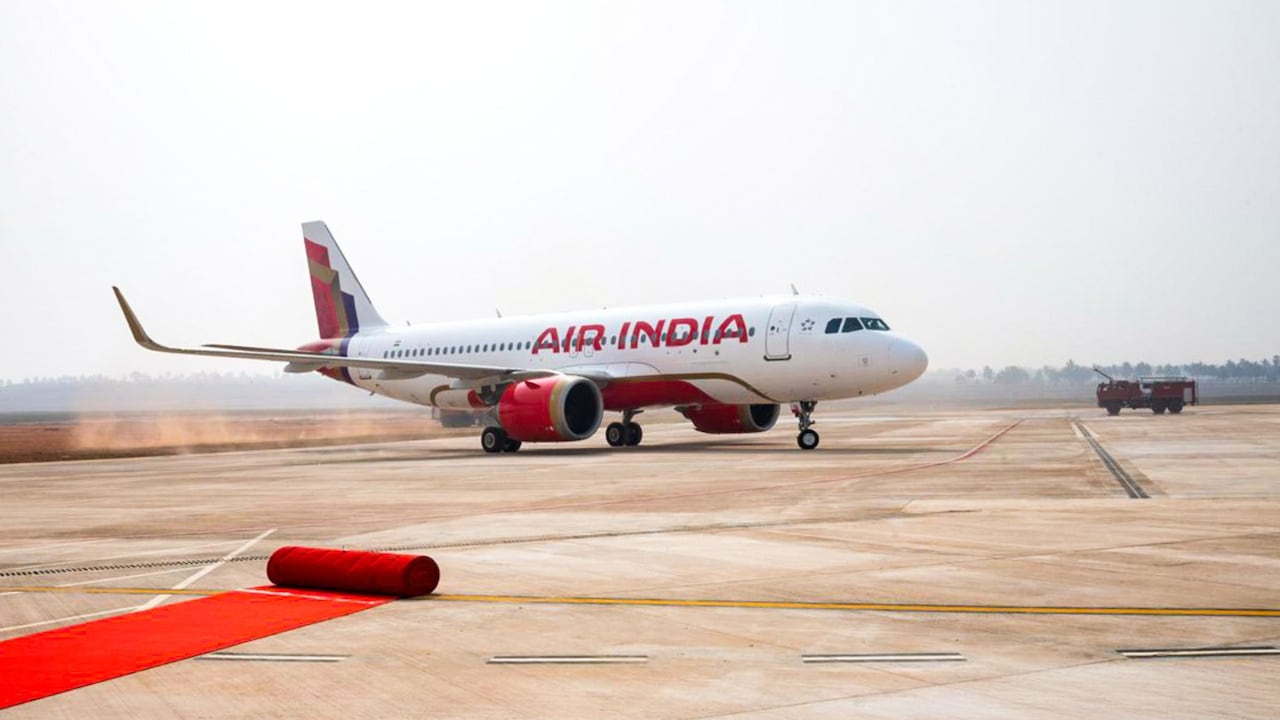
Air India is considering a major organisational restructuring, integrating key functions across Air India and Air India Express under the "One Air India" Model, as new CEO Tewolde Gebremariam looks to streamline operations, cut costs and improve the Tata-owned carrier's financial performance.
At a town hall with employees on Wednesday, Gebremariam outlined a new blueprint, meaning a possible senior management reshuffle and a review of its workforce.
The proposed "One Air India" model will see the two airlines operate as one group while retaining their separate brands and regulatory identities. Functions such as Finance, Human Resources, IT, Network Planning, Commercials, Marketing and Engineering could be brought under a common structure, while flight operations, crew management and customer-facing functions will continue to remain separate.
Both airlines will continue to operate under separate Air Operator Certificates (AOCs), with their existing licences and statutory requirements remaining unchanged.
Addressing employees, Gebremariam said the integration would help the two airlines draw on each other's capabilities and improve efficiency.
"People and teams will work as one group, drawing on the best capabilities and expertise across both airlines. The aim is to generate synergies," he said.
The restructuring could also lead to changes in the airline's senior management, with Gebremariam considering a reshuffle at the top level. The Air India Management Committee has already been recast as the Air India Management Team, with Air India Express CEO Deepak Rajawat becoming part of the group leadership structure.
Two new group-level positions -- Group Strategy Officer and Chief of Training Academy -- are being created. The latter will bring the group's flying academy, flight training organisations and technical training capabilities under a single leadership structure.
The proposed integration comes as Air India examines a potential workforce surplus of 8,000-10,000 employees. The group currently has around 30,000 employees. The review is part of a wider exercise to reduce costs and improve productivity.
Restoring profitability is among Gebremariam's biggest priorities, with the airline targeting Rs 6,000 crore in cost savings.
Air India has identified around Rs 3,500 crore in potential savings and has already achieved approximately Rs 1,500 crore, with a team of around 11 senior executives overseeing the exercise.
The airline has also received more than 1,500 suggestions from employees on reducing costs and improving efficiency.
Gebremariam said fuel prices paid by the airline this year are almost double last year's levels. Air India is targeting a 20 per cent reduction in non-fuel costs and a 5 per cent reduction in fuel costs. "Cost discipline is not a one-time exercise. It must become part of our culture," he said.
The airline is also tightening scrutiny of executive travel, procurement and supplier expenses. Gebremariam said savings would have to come from both large initiatives and smaller everyday decisions.
Explaining the pressure on the airline's finances, he said, "CASK is much higher than RASK. That is why we are losing money."
However, there are signs of improvement in revenue performance. "October and November have been encouraging. In some areas, load factors have grown, while in others yields have improved. Overall, RASK is increasing. We are making progress," he said.
Air India is also reworking its network to reduce the impact of regional airspace restrictions and improve operating efficiency. More westbound connecting traffic is being routed through Mumbai, while Delhi will increasingly serve eastbound connections.
The airline is looking to strengthen multiple hubs across India, including in the south, with Mumbai and Bengaluru emerging as potential centres for feeding passenger traffic.
The move assumes significance as the closure of Pakistani airspace has forced Indian carriers to take longer routes on several international sectors, increasing operating costs and affecting network efficiency.
"We can't control the external environment. What we can do is build an airline that is resilient in all conditions, can withstand challenges and continue to succeed. We need to make ourselves stronger every day," Gebremariam said.