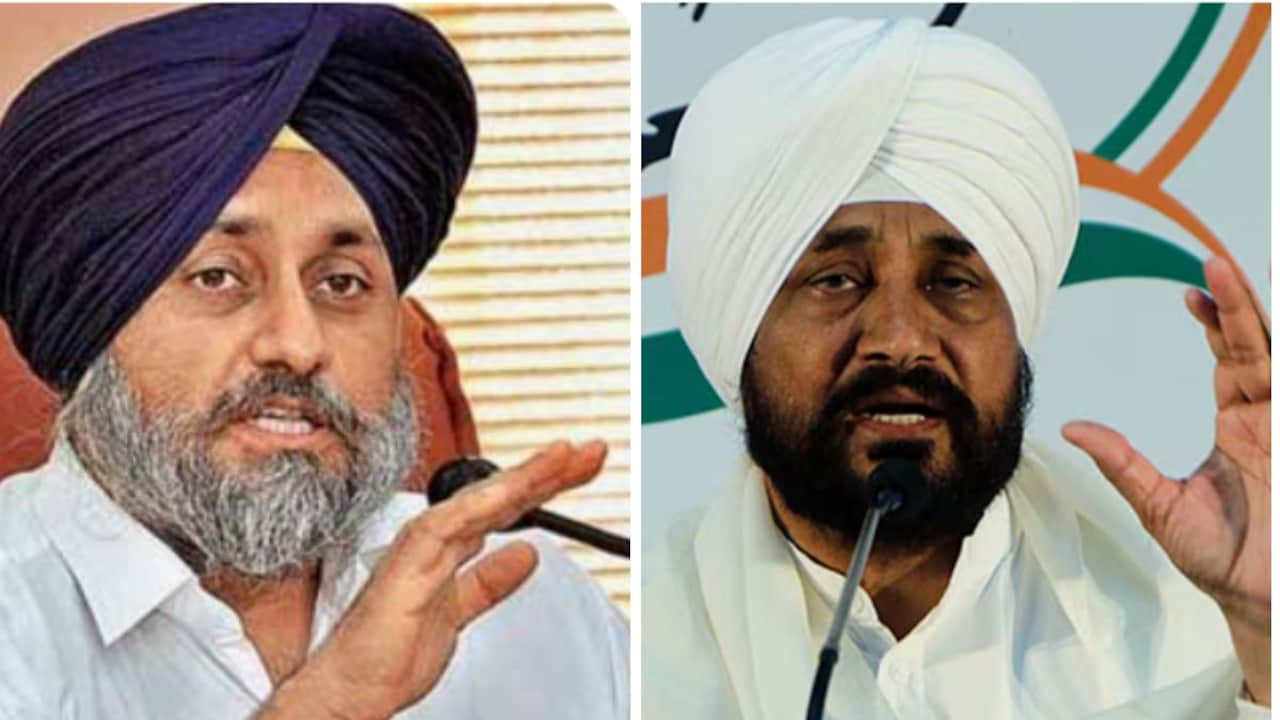
The reunion of the Shiromani Akali Dal (SAD) and the BJP ahead of the 2027 Punjab assembly elections has opened a fresh front in Punjab's political battle, with Congress MP Charanjit Singh Channi directly challenging SAD president Sukhbir Singh Badal over the Akal Takht's 2004 directive concerning the Rashtriya Swayamsevak Sangh or RSS.
Turning the renewed alliance into a question of religious accountability, Channi has asked whether the Akali Dal, which has traditionally projected itself as a representative of Sikh interests, can enter an alliance with the BJP while continuing to abide by the directive issued by Sri Akal Takht Sahib.
Invoking the hukamnama dated July 2004, Channi said it directed the Sikh community and its leaders not to maintain ties with the RSS, the ideological mentor of the BJP.
He challenged Sukhbir to clarify whether the Akali Dal was still following the directive or has effectively moved away from the position taken by the highest temporal seat of the Sikhs.
"There is a hukamnama, a directive from Sri Akal Takht Sahib, issued on 23 July 2004, which mandates that the Sikh community must not maintain any ties with the RSS. This directive also applied to their leaders," Channi said.
Taking the argument directly to the Akali leadership, he asked whether the Sikh community should distance itself from the party if it was no longer adhering to the hukamnama.
The timing of Channi's intervention is significant.
The SAD and BJP have announced the revival of their alliance after parting ways in September 2020 over the three contentious farm laws. The two parties are now preparing to contest the 2027 assembly elections together, bringing back a political arrangement that had dominated Punjab politics for years.
However, the renewed partnership has also revived the uncomfortable ideological question for the Akalis. The 2004 Akal Takht directive was issued amid concerns over the activities of the RSS and its Sikh wing, Rashtriya Sikh Sangat, particularly their interpretation and projection of Sikh history and identity.
For Channi, the BJP's return as an electoral partner of the Akalis provides an opportunity to question the party's position on panthic issues and its relationship with Sikh religious institutions.
Sukhbir Singh Badal, however, refused to accept the challenge and turned the attack back on the Congress, invoking one of the most painful chapters in Sikh history - Operation Blue Star.
Reacting sharply, the SAD president said it was shameful for a Congress leader to lecture the Akali Dal on the hukamnamas of Sri Akal Takht Sahib when the Congress government had ordered the military operation at the Golden Temple complex in June 1984.
He accused the Congress of attacking Sri Akal Takht Sahib with tanks and mortars and alleged that the party was responsible for the killing of thousands of innocent Sikhs. He said Channi should be ashamed of questioning the Akalis instead of answering for his party's historical record.
The counterattack has effectively turned the exchange into a direct Channi-versus-Sukhbir political confrontation, with both leaders seeking to place the other on the defensive over Sikh religious and historical issues.
The controversy goes beyond the immediate exchange of accusations. For the Akali Dal, Sikh identity, religious institutions and its traditional panthic constituency have been central to its political positioning. The SGPC and its relationship with the Akali leadership have also remained important elements of this political space.
The challenge for Sukhbir is therefore not limited to defending an electoral arrangement. He must also respond to questions from political opponents about how the alliance fits into the Akali Dal's traditional panthic positioning.
With the 2027 assembly elections approaching, the exchange signals that the SAD-BJP reunion could make panthic politics, Sikh identity and the legacy of 1984 important battlegrounds in Punjab's electoral contest.
Track Latest News Live on NDTV.com and get news updates from India and around the world