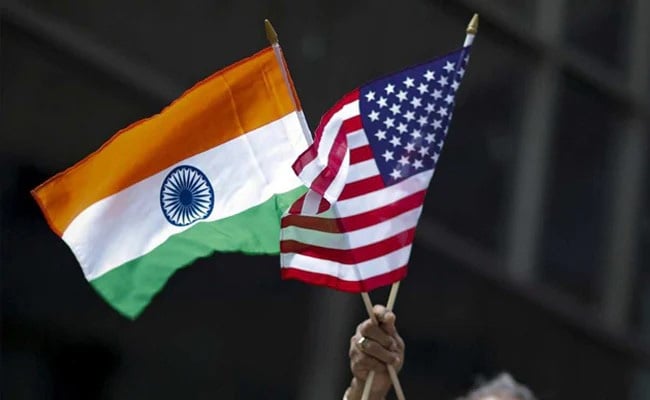
Centre has said it is examining the tariffs of up to 25 per cent that the United States proposed on Indian goods on Wednesday. It also rejected Washington's claim that India produces more than it needs, saying in a statement soon after the announcement that the country has no excess capacity in any sector."Government of India has taken note of the Notice of Determination and Request for Comments issued by the United States Trade Representative (USTR) in the Section 301 Investigation concerning Acts, Policies, and Practices of 14 economies, including India, relating to Structural Excess Capacity and Production in Manufacturing Sectors," the Ministry of Commerce & Industry said in a statement.
"India does not have structural excess capacity in any sector," it said.
The US says India produces more than it needs, keeps its market hard to enter and does not protect workers well enough, and that all of this harms US companies.
The proposal follows investigations under Section 301, a part of American trade law, which the US Trade Representative began in March and which covered 16 economic jurisdictions. The office has spent several months checking whether these economies favour surplus production, a practice that drives down prices and hurts American industry.
"For decades, many of our trading partners have adopted industrial strategies built on targeting manufacturing, wage and labour suppression, financial and other support, non-market economy inputs, and other market-distorting practices that tilt the trade balance in their favour while eroding America's manufacturing base," US Trade Representative Jamieson Greer said.
The report on India, titled 'India's Acts, Policies, and Practices Relating to Structural Excess Capacity and Production in Manufacturing Sectors', says India sells more to the US than it buys in some areas.
"India generates trade surpluses in sectors such as pharmaceuticals, steel, and ICT goods, revealing dependencies on Indian manufacturing in certain key sectors," the USTR said.
India is not the only country in the frame, other countries, including China, will face proposed rates of 20 to 35 per cent, though those that already have deals with Washington would pay less. The European Union, Japan, South Korea, Taiwan and Switzerland would face 15 per cent, which includes standard import duties, while Vietnam would pay 20 per cent once its trade deal is finalised.
The tariff proposal comes after the US Supreme Court overturned the wide-ranging trade levies that the Trump administration had imposed under the International Emergency Economic Powers Act. After that reversal, the US Trade Representative opened two Section 301 investigations, one directed at 60 jurisdictions, covering about a hundred countries, for violating export rules on forced labour, and the other against 16 jurisdictions for promoting surplus production.
The ruling also sent India-US trade talks to the drawing board, as the framework that New Delhi and Washington had finalised in February returned to the discussion table once the tariffs were struck down. The two sides are now negotiating an interim bilateral trade agreement.
"It has been India's position that any trade-related concerns should be addressed within the framework of these negotiations. Government of India remains committed to working closely with the United States towards the early conclusion of the India-US Bilateral Trade Agreement," the Commerce Ministry said.
Track Latest News Live on NDTV.com and get news updates from India and around the world