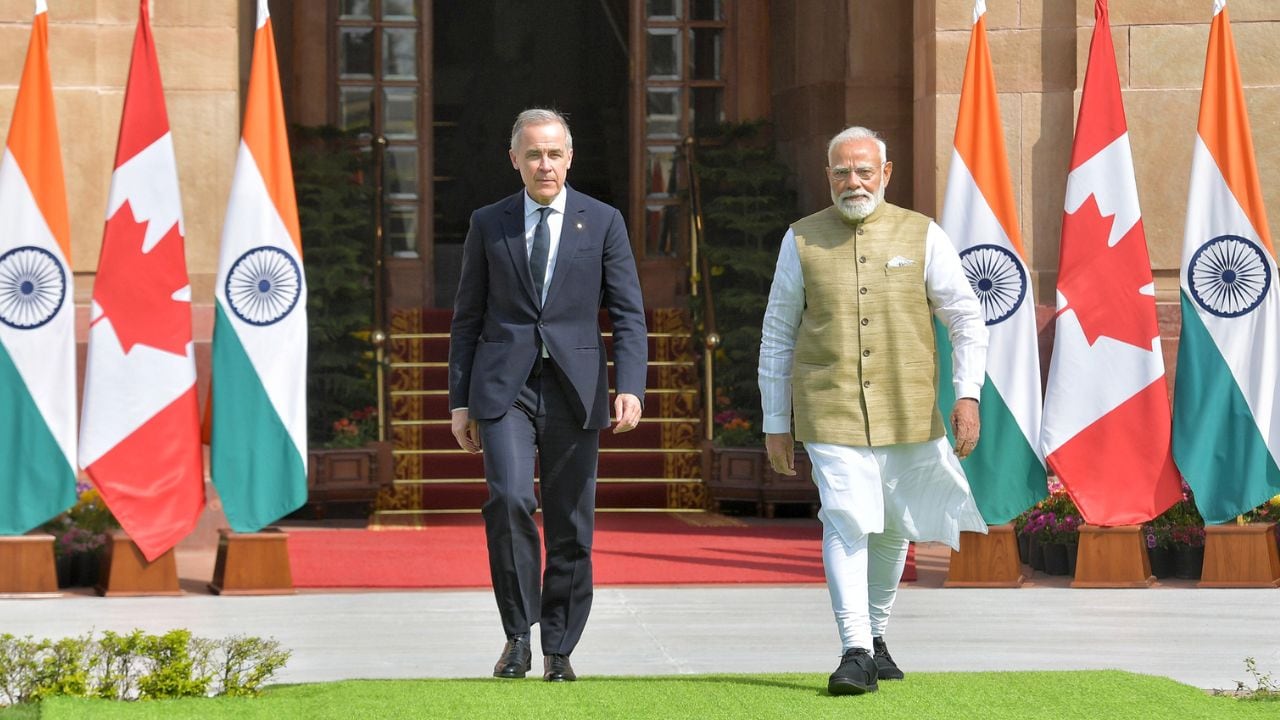
Prime Minister Narendra Modi's upcoming visit to Canada on December 11 and 12 could provide fresh momentum to the India-Canada relationship, with a proposed Comprehensive Economic Partnership Agreement (CEPA) expected to be central to discussions between Modi and Canadian Prime Minister Mark Carney. In an exclusive interview with NDTV, Ontario's Minister of Economic Development, Job Creation and Trade, Victor Fedeli, expressed optimism that the two countries could conclude the trade agreement by the end of 2026, describing it as an important opportunity for both economies to deepen commercial engagement after several years of diplomatic tensions.
"Relations are in order for both Prime Minister Modi and Prime Minister Carney for really reuniting the two countries and moving our trade so well," the provincial minister told NDTV.
"We're looking forward to both federal governments concluding a successful deal," he added.
READ | Centre Approves Rs 2,814-Crore Scheme To Promote Lithium, Nickel Processing
Fedeli said the agreement would be particularly significant for Ontario, Canada's largest provincial economy with approximately 40 per cent of the country's population. The province is a major manufacturing and innovation centre, with strengths in aerospace, automotive, technology and advanced manufacturing.
"We make most things in the province of Ontario -- planes, trains, all are made in Ontario," he said, adding that a trade agreement with India would complement the province's existing network of international trade arrangements.
The proposed CEPA assumes added significance as India and Canada work towards an ambitious target of doubling bilateral trade to $70 billion by 2030. The agreement is expected to improve market access, encourage investment and provide businesses with greater predictability across sectors.
The relationship deteriorated sharply following the 2023 killing of Khalistani separatist Hardeep Singh Nijjar in British Columbia and subsequent allegations by Canadian authorities of links to Indian government agents, which New Delhi rejected. The dispute led to diplomatic expulsions and a prolonged freeze in high-level engagement.
READ | In Leaked Audio, Gangster Goldy Brar Claims He Killed Hardeep Nijjar In Canada
The two governments have since worked towards normalisation, with Carney's India visit in March 2026 helping establish a framework for renewed cooperation and the formal launch of CEPA negotiations.
The sixth round of negotiations concluded in New Delhi on November 20, with discussions covering goods, services, rules of origin, intellectual property and investment promotion. The agreement remains under negotiation, with both sides targeting a conclusion by the end of the year.
For Fedeli, the renewed engagement is already translating into greater business confidence. He said his latest India visit had revealed a noticeable shift in how Indian companies view Ontario, increasingly considering the province a gateway to North American markets.
"When they need a beachhead in North America, they aim right for Ontario," he said.
READ | India, Canada Discuss Free Trade Pact Aimed At Boosting Bilateral Commerce
The minister credited the leadership of both Carney and Ontario Premier Doug Ford with helping strengthen Canada's international economic positioning. He also stressed that Ontario had maintained its engagement with India even during the diplomatic downturn.
"We showed up twice a year since 2018. During those tough times, we still showed up and we just said, look, we will leave the geopolitical issues to both our federal governments. We're here to roll up our sleeves and get down to business," Fedeli said.
He revealed that Ontario's two-way trade with India had increased by 88 per cent in eight years, against a target set in 2018 to double trade over a decade. The province maintains trade representative offices in New Delhi and Mumbai and is considering a possible third office in the Bengaluru region to support growing business engagement.
Beyond trade volumes, Fedeli identified technology, artificial intelligence and advanced manufacturing as immediate areas for collaboration. He described Ontario and India as natural partners, particularly as Indian technology companies seek international expansion without relocating their operations.
"Tech, tech, tech is really important," he said, identifying technology, life sciences and advanced manufacturing as sectors with significant potential.
Artificial intelligence, however, could become a defining pillar of the partnership. Fedeli highlighted Ontario's research ecosystem, citing 1,600 AI companies, 1,700 students enrolled in AI master's programmes and 17,000 new AI employees in the previous year.